Microwave and millimetre-wave sensing enables non-contact measurement of internal structures, material properties, distance, and velocity that are difficult to capture with visible light. Our research asks what information electromagnetic waves can uniquely reveal, and how that information can become useful measurement systems in society.
We integrate electromagnetic analysis, signal processing and inverse problems, AI, multi-sensor fusion, platform control, and system implementation. Our aim is to advance both measurement accuracy and practical deployment.
Electromagnetic Signal Processing and Inverse Problems
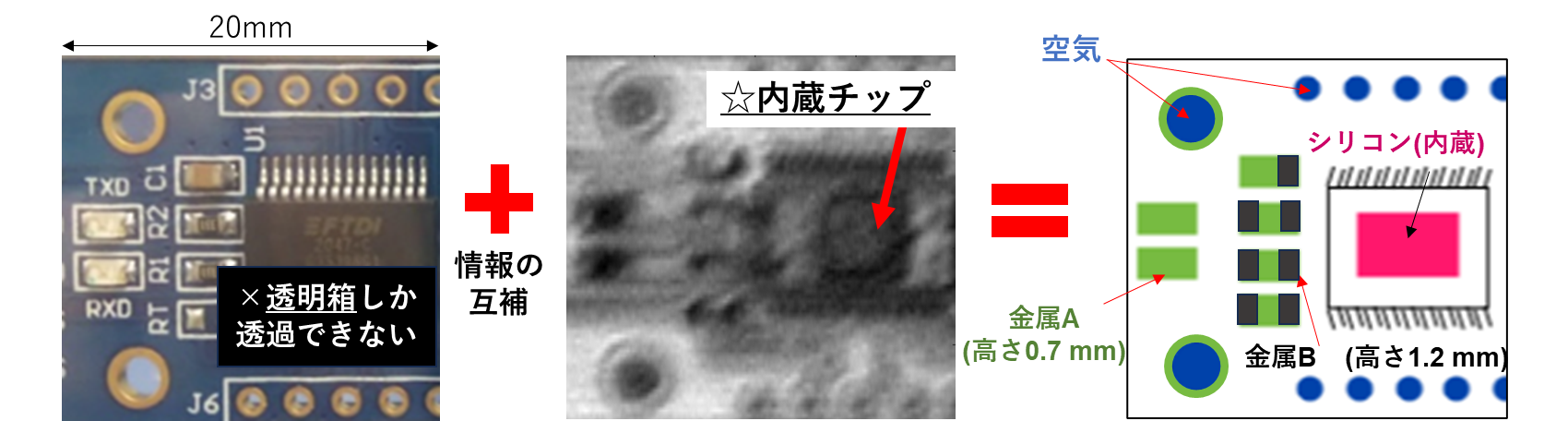
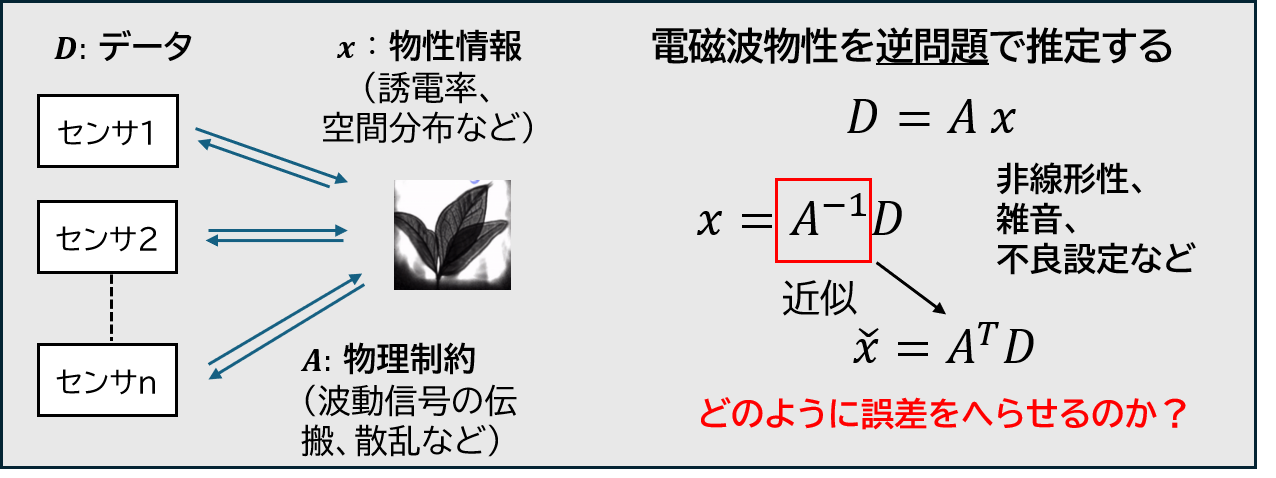
Estimating internal structure, shape, position, thickness, and permittivity distributions from reflected, transmitted, and scattered waves is a central electromagnetic inverse problem. By combining measurements from multiple frequencies and observation positions with electromagnetic models, we can infer hidden components and material distributions.
Real data include noise, multipath effects, limited observation ranges, and model errors, making simple inverse calculations unstable. We combine regularisation, Bayesian estimation, sparse reconstruction, numerical optimisation, and physics-informed AI to achieve stable and interpretable reconstruction from limited data.
Electromagnetic Imaging with Synthetic Aperture Radar
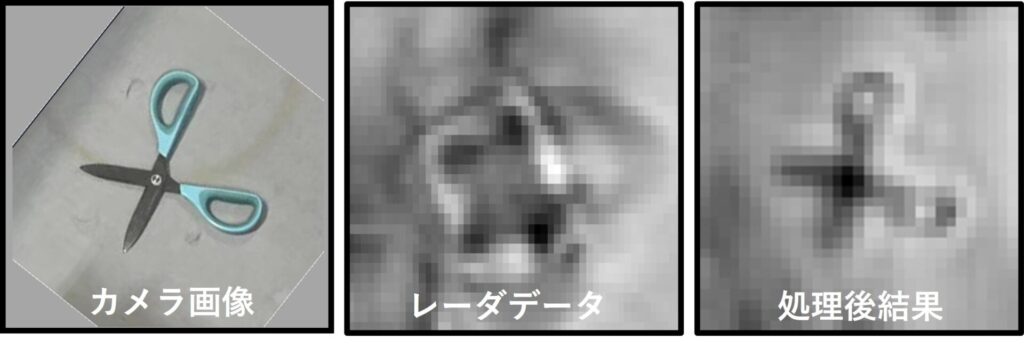
Synthetic aperture radar (SAR) integrates the amplitude and phase of signals measured at multiple antenna positions to create a virtual aperture larger than the physical antenna. It produces high-resolution electromagnetic images and can be applied not only to satellite and airborne remote sensing, but also to near-field millimetre-wave imaging, handheld measurements, robots, and drones.
Higher frequencies and wider bandwidths improve range resolution, but require precise treatment of near-field wavefront correction, position errors, phase offsets, and multipath reflections. We combine physics-based image reconstruction with data-driven processing to obtain clear two- and three-dimensional images from limited observation ranges.
Nanoscale Metal Thin-Film Thickness Estimation
Content is being prepared.